Modern businesses can’t afford slow, manual bookkeeping processes. Between receipts, invoices, bank statements, reconciliations, and compliance requirements, traditional bookkeeping consumes valuable hours every week.
Bookkeeping automation changes that.
It helps businesses and accounting firms capture documents digitally, extract financial data accurately, reconcile transactions faster, and gain real-time visibility — without increasing admin workload.
If you’re still relying on spreadsheets and manual entry, here’s why automation is no longer optional.
What Is Bookkeeping Automation?
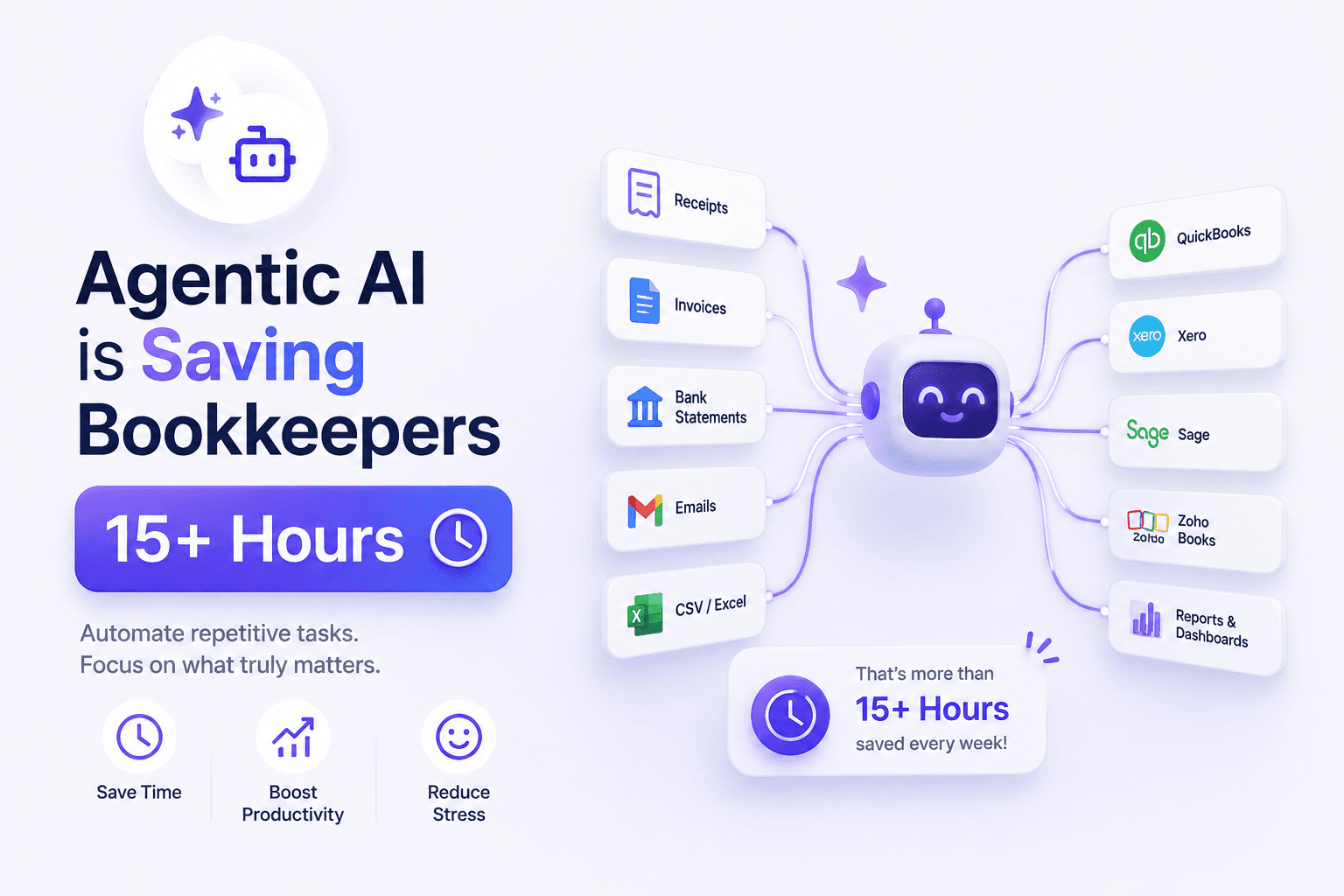
Bookkeeping automation uses intelligent software to handle repetitive financial tasks such as:
- Extracting data from receipts and invoices
- Categorising expenses automatically
- Reconciling bank transactions
- Organising financial records in real time
- Syncing with accounting platforms
Instead of entering data line by line, automation tools capture and process information instantly — improving speed, accuracy, and visibility.
Leading automation workflows combine Receipt OCR, Invoice OCR, and bank statement extraction so bookkeepers spend less time on data entry and more on advisory work.
The Key Benefits of Bookkeeping Automation
1. Save Hours Every Week
Manual data entry is one of the biggest time drains in accounting.
Automation eliminates repetitive tasks like:
- Typing invoice details
- Matching bank transactions
- Sorting receipts
- Updating ledgers
With automated workflows, what used to take hours can be completed in minutes. That time can be reinvested into advisory, strategy, or business growth.
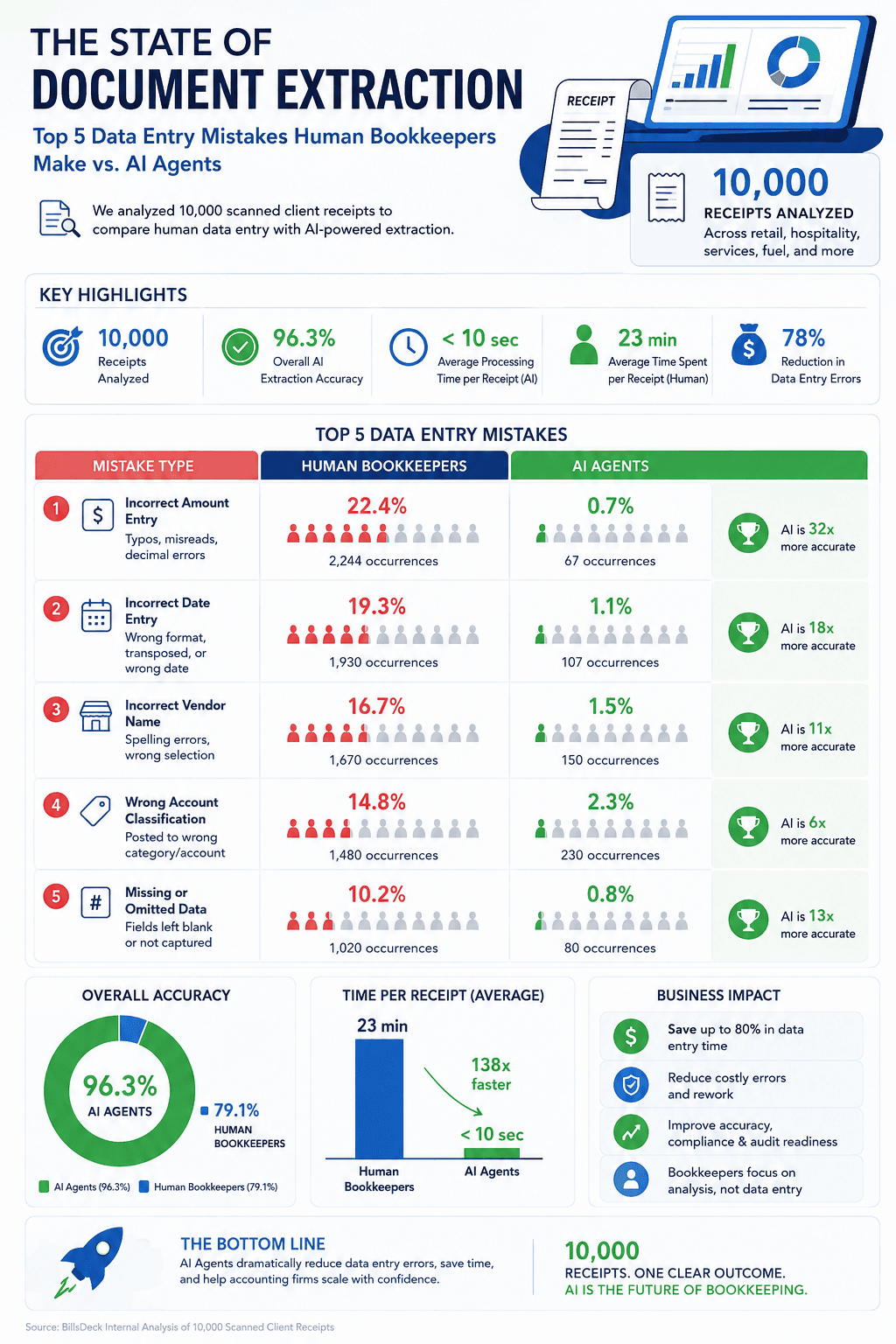
2. Reduce Errors and Improve Accuracy
Human error is inevitable — especially when handling repetitive tasks.
Automation reduces:
- Incorrect data entries
- Duplicate records
- Missed transactions
- Misclassified expenses
By extracting data directly from source documents and applying consistent categorisation rules, your books stay cleaner and more reliable.
3. Real-Time Financial Visibility
Traditional bookkeeping often means waiting until month-end to understand performance.
Automation updates your records as transactions happen. This gives you:
- Up-to-date cash flow visibility
- Accurate expense tracking
- Better profitability insights
- Faster financial reporting
Instead of reacting weeks later, you can make decisions with confidence in real time.
4. Faster and Smoother Month-End Close
Month-end doesn’t need to be stressful.
When transactions are captured and reconciled throughout the month:
- Fewer surprises appear at closing
- Reports are ready sooner
- Adjustments are minimal
- Deadlines are easier to meet
Automation turns month-end from a scramble into a predictable routine.
5. Improved Client and Team Collaboration
Chasing receipts and invoices shouldn’t be part of your workflow.
With digital submission and automated processing:
- Clients upload documents instantly
- Teams access centralised records
- Missing documents are reduced
- Communication becomes structured and trackable
This creates a smoother experience for everyone involved.
6. Scale Without Increasing Admin Work
Growth often means more transactions, more invoices, and more complexity.
Without automation, that means more staff and more manual effort.
With automation:
- Transaction volume can increase without operational strain
- Firms can onboard more clients efficiently
- Businesses can expand without overwhelming their finance teams
Automation supports growth without adding chaos.
From Data Entry to Strategic Insights
The real value of bookkeeping automation isn’t just efficiency — it’s transformation.
When books are accurate and up to date:
- Accountants can focus on advisory services
- Businesses can forecast with better data
- Financial decisions become proactive, not reactive
- Client conversations shift from compliance to strategy
Clean data enables better insights — and better insights drive better outcomes.
Why 2026 Is the Turning Point for Automation
Businesses today expect speed, accuracy, and transparency. Manual bookkeeping simply can’t keep up with:
- Increasing transaction volumes
- Digital payments and online sales
- Remote teams and distributed clients
- Real-time reporting expectations
Automation is no longer a luxury — it’s becoming the standard for competitive businesses and modern accounting firms.
Is Bookkeeping Automation Right for You?
You’ll benefit from automation if you:
- Spend hours on manual data entry
- Struggle with delayed financial visibility
- Face frequent reconciliation issues
- Want to scale without hiring aggressively
- Aim to provide higher-value advisory services
If any of these sound familiar, automation can deliver immediate impact.
Final Thoughts
Bookkeeping automation isn’t about replacing accountants or finance teams.
It’s about removing repetitive admin, reducing risk, and creating space for higher-value work.
By automating document capture, categorisation, and reconciliation, businesses gain clarity. Accounting firms gain efficiency. And everyone gains time.
The future of bookkeeping is real-time, intelligent, and automated — and the sooner you adopt it, the greater the advantage you’ll build.
Explore BillsDeck Automation Features
- Receipt OCR — Capture and categorize expenses automatically
- Invoice OCR — AP-ready invoice extraction
- Bank statements — Transaction extraction and reconciliation prep
- Email parser — Process invoices and receipts from inbox
- Google Sheets sync — Export structured data to spreadsheets