What Is a Journal Entry in Accounting?
A journal entry in accounting is the first step in recording any financial transaction in a business. Every time money moves—whether it's a sale, expense, or payment—it gets recorded as a journal entry.
Think of it as the foundation of your accounting system. Without journal entries, financial statements like profit & loss or balance sheets cannot exist.
Definition of a Journal Entry
A journal entry is a record of a financial transaction where at least two accounts are affected—one debited and one credited.
In simple terms:
It’s how businesses track “who gave what” and “who received what.”
Why It Is the Foundation of Accounting
Journal entries are critical because they:
- Capture every financial transaction
- Maintain chronological order of records
- Ensure the accounting equation stays balanced
Without journal entries, accounting systems would lack structure and accuracy.
Why Journal Entries Are Important
1. Financial Accuracy
Journal entries ensure that every transaction is recorded correctly using the double-entry system, reducing errors.
2. Audit Trail
They create a clear history of all financial activities, making it easier for audits and reviews.
3. Compliance
Accurate journal entries help businesses comply with accounting standards and tax regulations.
Key Components of a Journal Entry
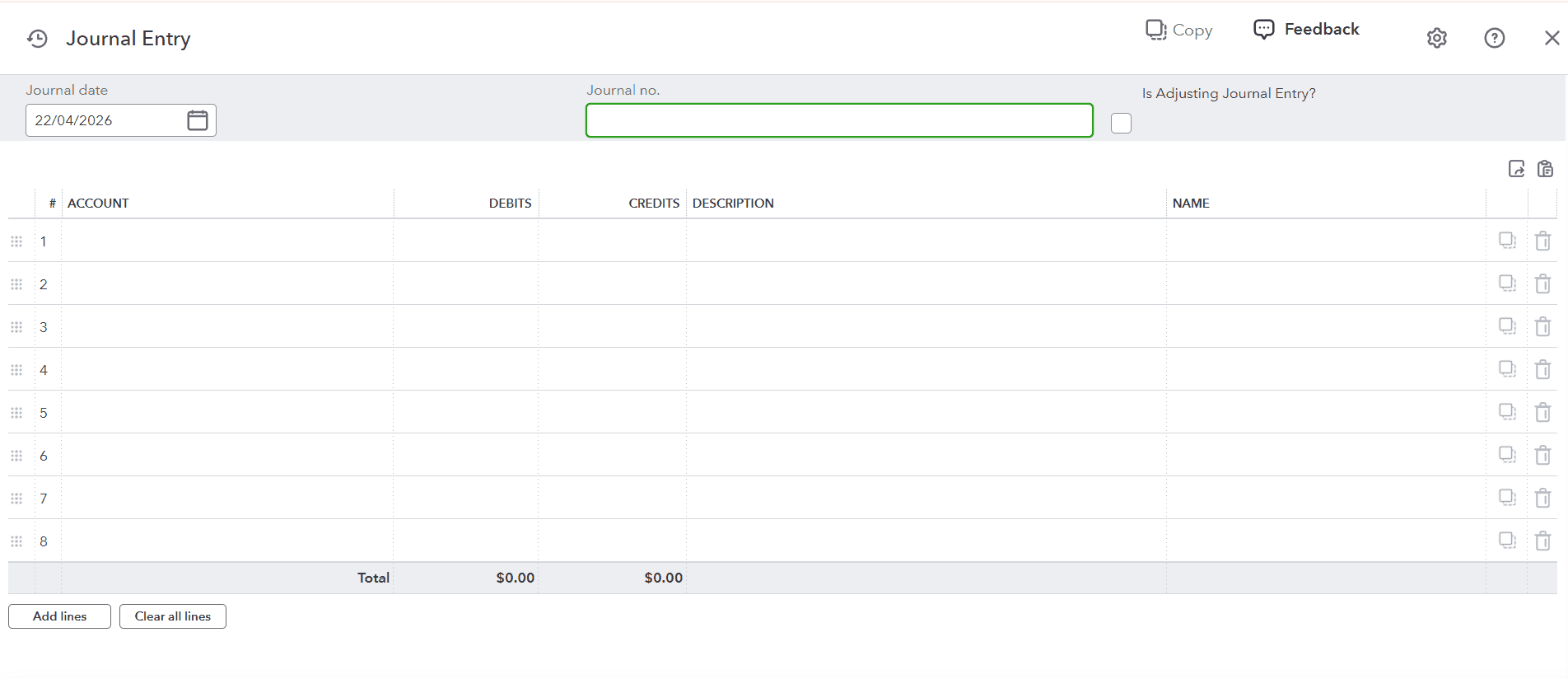
Every journal entry includes the following elements:
- Date – When the transaction occurred
- Accounts Involved – Which accounts are affected
- Debit & Credit – The dual impact of the transaction
- Amount – Value of the transaction
- Narration – A brief explanation of the transaction
Journal Entry Format (With Table Example)
Here’s the standard format of a journal entry:
| Date | Account Name | Debit (₹) | Credit (₹) |
|---|---|---|---|
| 01-Apr-25 | Purchases A/c | 5,000 | |
| To Cash A/c | 5,000 | ||
| (Being goods purchased for cash) |
Explanation of Columns
- Date: Transaction date
- Account Name: Accounts impacted
- Debit Column: Value received
- Credit Column: Value given
- Narration: Explanation of the entry
Basic Accounting Rules (Debit & Credit)
To understand journal entries, you must know the golden rules of accounting:
1. Assets
- Increase → Debit
- Decrease → Credit
2. Liabilities
- Increase → Credit
- Decrease → Debit
3. Expenses
- Always Debit
4. Income
- Always Credit
Example:
- Buying equipment → Asset increases → Debit
- Paying rent → Expense → Debit
Simple Journal Entry Examples
1. Cash Purchase
| Account | Debit (₹) | Credit (₹) |
|---|---|---|
| Purchases A/c | 2,000 | |
| To Cash A/c | 2,000 |
2. Credit Sale
| Account | Debit (₹) | Credit (₹) |
|---|---|---|
| Debtor A/c | 3,000 | |
| To Sales A/c | 3,000 |
3. Expense Payment (Rent)
| Account | Debit (₹) | Credit (₹) |
|---|---|---|
| Rent Expense A/c | 1,500 | |
| To Cash A/c | 1,500 |
4. Salary Entry
| Account | Debit (₹) | Credit (₹) |
|---|---|---|
| Salary Expense A/c | 10,000 | |
| To Bank A/c | 10,000 |
Types of Journal Entries
1. General Entries
Regular day-to-day transaction entries.
2. Adjusting Entries
Entries made at the end of the accounting period (e.g., depreciation, accruals).
3. Closing Entries
Used to transfer balances to final accounts at the end of the financial year.
Common Mistakes to Avoid
Avoid these common journal entry errors:
- Reversing debit and credit
- Missing narration
- Using incorrect accounts
- Recording wrong amounts
Even small mistakes can lead to major financial discrepancies.
Journal Entry vs Ledger (Important Comparison)
| Basis | Journal Entry | Ledger |
|---|---|---|
| Purpose | Record transactions | Classify transactions |
| Order | Chronological | Account-wise |
| Detail Level | Detailed entries | Summarized balances |
In short:
- Journal = Book of original entry
- Ledger = Book of final classification
FAQs
What is a journal entry in simple words?
A journal entry is a record of a financial transaction where one account is debited and another is credited.
Is journal entry same as ledger?
No. Journal entries record transactions first, while ledgers organize those entries into accounts.
How many types of journal entries are there?
There are mainly three types:
- General entries
- Adjusting entries
- Closing entries
Conclusion
Journal entries are the building blocks of accounting. They ensure every transaction is recorded accurately and helps businesses maintain financial clarity.
However, manually recording journal entries can be time-consuming and prone to errors.
Simplify Journal Entries with Automation
With tools like BillsDeck, you can:
- Automatically generate journal entries
- Sync transactions with accounting software
- Reduce manual errors
- Save hours of bookkeeping time
Start automating your accounting today and focus on growing your business.