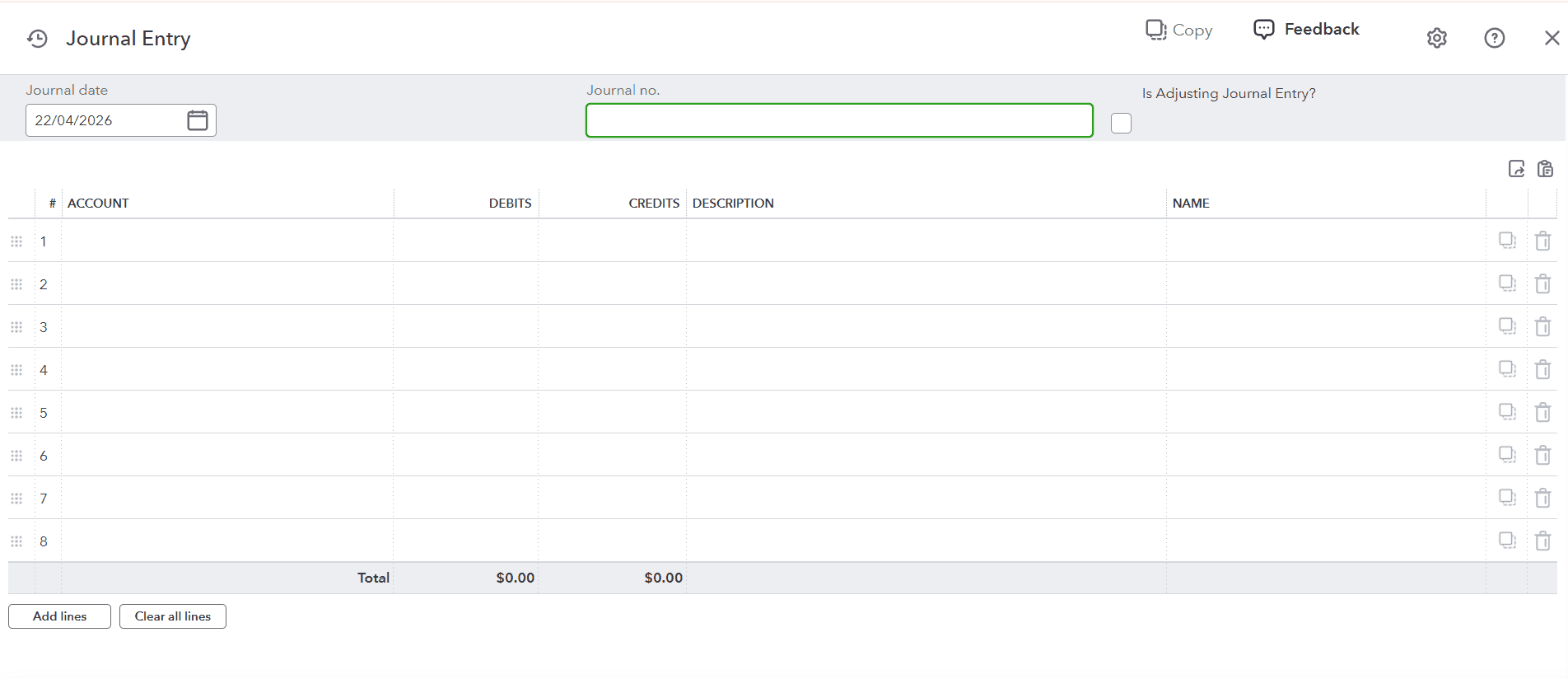
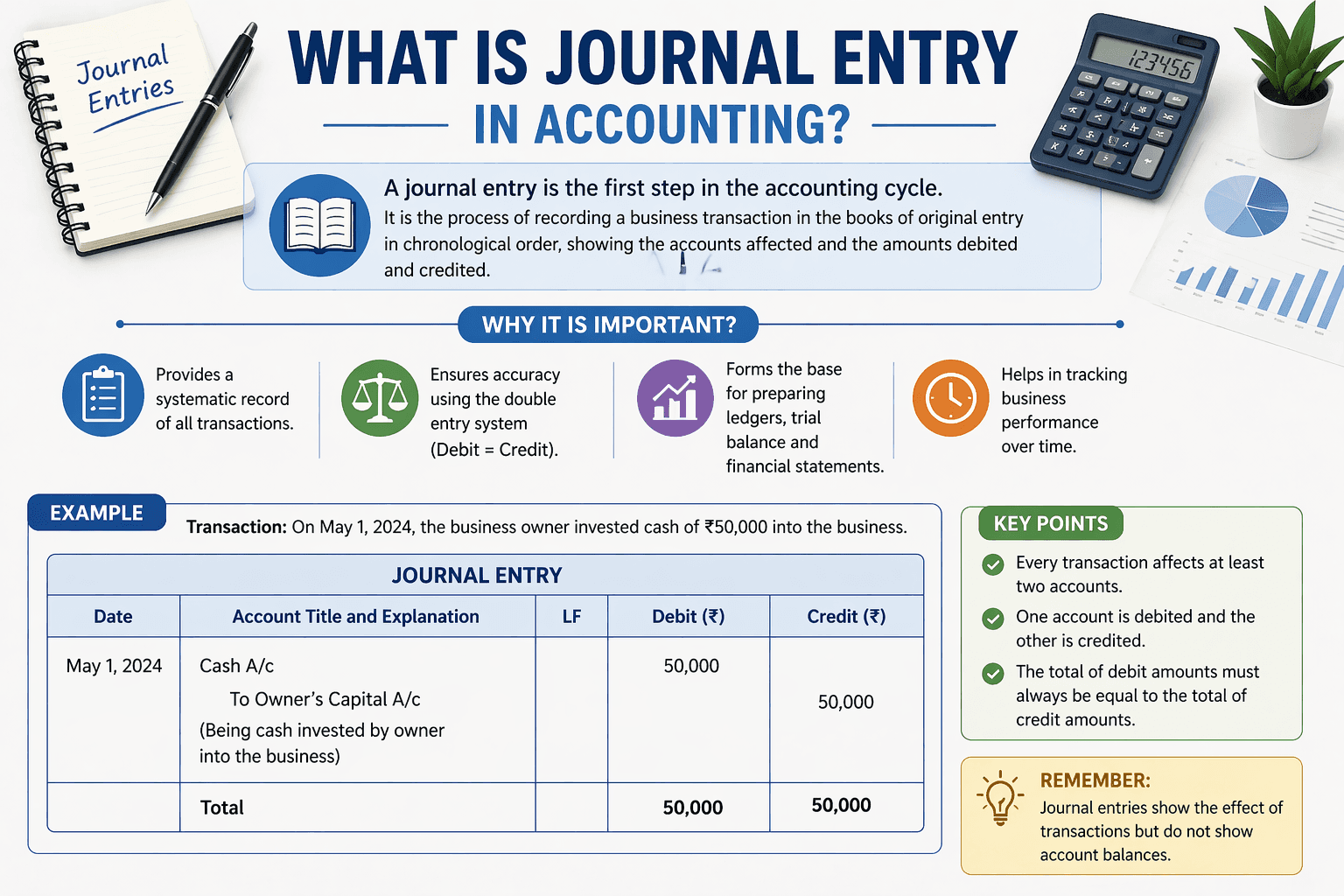
How to Write a Journal Entry
Writing a journal entry is one of the most important skills in accounting. Every financial transaction in a business must be recorded correctly using a structured format.
This guide explains how to write a journal entry step by step, with clear examples and practical tips for beginners.

What You Need Before Writing a Journal Entry
Before recording any transaction, gather the necessary information to ensure accuracy.
Transaction Details
You need a clear understanding of:
- What the transaction is
- The amount involved
- The date of the transaction
- The parties involved
Supporting Documents
Always refer to documents such as:
- Invoices
- Receipts
- Bank statements
- Bills
These documents act as proof and help avoid errors during recording.
Step-by-Step Process
Follow these steps to write a correct journal entry.
Step 1 – Identify the Transaction
Start by understanding what actually happened.
Example: A business purchased office supplies worth ₹2,000 in cash.
Step 2 – Determine Accounts Involved
Identify at least two accounts affected by the transaction.
In the example:
- Office Supplies Account
- Cash Account
Step 3 – Apply Debit & Credit Rules
Use basic accounting rules:
- Expenses → Debit
- Assets → Debit when increased
- Cash (Asset) → Credit when reduced
So:
- Office Supplies → Debit
- Cash → Credit
Step 4 – Record the Entry
Write the entry in the standard format:
| Date | Account Name | Debit (₹) | Credit (₹) |
|---|---|---|---|
| 05-Apr-25 | Office Supplies A/c | 2,000 | |
| To Cash A/c | 2,000 |
Step 5 – Add Narration
Add a short explanation below the entry.
Example: (Being office supplies purchased for cash)
Example Walkthrough (End-to-End)
Let’s take a complete example:
Transaction:
A company receives ₹10,000 from a customer for services provided.
Step Breakdown:
- Identify transaction → Money received
- Accounts involved → Cash, Service Revenue
- Apply rules:
- Cash increases → Debit
- Revenue increases → Credit
Final Journal Entry:
| Date | Account Name | Debit (₹) | Credit (₹) |
|---|---|---|---|
| 10-Apr-25 | Cash A/c | 10,000 | |
| To Service Revenue A/c | 10,000 |
Narration:
(Being cash received for services rendered)
Journal Entry Template
Use this simple template for any transaction:
| Date | Account Name | Debit (₹) | Credit (₹) |
|---|---|---|---|
| DD-MM-YY | Debit Account | XXXX | |
| To Credit Account | XXXX | ||
| (Narration) |
Common Errors Beginners Make
Avoid these frequent mistakes:
- Skipping steps while analyzing transactions
- Choosing the wrong account type
- Reversing debit and credit entries
- Forgetting narration
- Recording incorrect amounts
Even small mistakes can affect financial reports significantly.
Tips to Improve Accuracy
To improve your journal entry skills:
- Always verify transactions with supporting documents
- Review debit and credit rules regularly
- Practice with real-world examples
- Use accounting software to reduce manual errors
FAQs
How do I start a journal entry?
Start by identifying the transaction and determining which accounts are affected.
How do you end a journal entry?
End with a clear narration explaining the purpose of the transaction.
How long should a journal entry be?
It should be concise, including only necessary details: accounts, amounts, and narration.
Conclusion
Writing journal entries becomes easier with practice and a clear understanding of accounting rules. Following a structured process ensures accuracy and consistency in financial records.
Manual entry can be time-consuming, especially as transactions grow.
Using tools like BillsDeck helps streamline journal entries, reduce errors, and maintain organized financial records. Automating repetitive accounting tasks allows businesses to focus more on operations and growth.
Sources
- Financial Accounting Standards Board (FASB) – https://www.fasb.org
- International Financial Reporting Standards (IFRS) – https://www.ifrs.org
- Investopedia – Journal Entry Definition – https://www.investopedia.com/terms/j/journalentry.asp