Introduction
The golden rules of accounting form the foundation of recording financial transactions. These rules help ensure that every debit has a corresponding credit and that accounts are recorded correctly.
What are the Golden Rules of Accounting?
The golden rules are basic principles used to record journal entries based on account types.
Types of Accounts
Personal Account
Related to individuals or organizations.
Examples:
- Customer accounts
- Supplier accounts
Real Account
Related to assets.
Examples:
- Cash
- Machinery
- Furniture
Nominal Account
Related to income and expenses.
Examples:
- Salary expense
- Rent income
The 3 Golden Rules
-
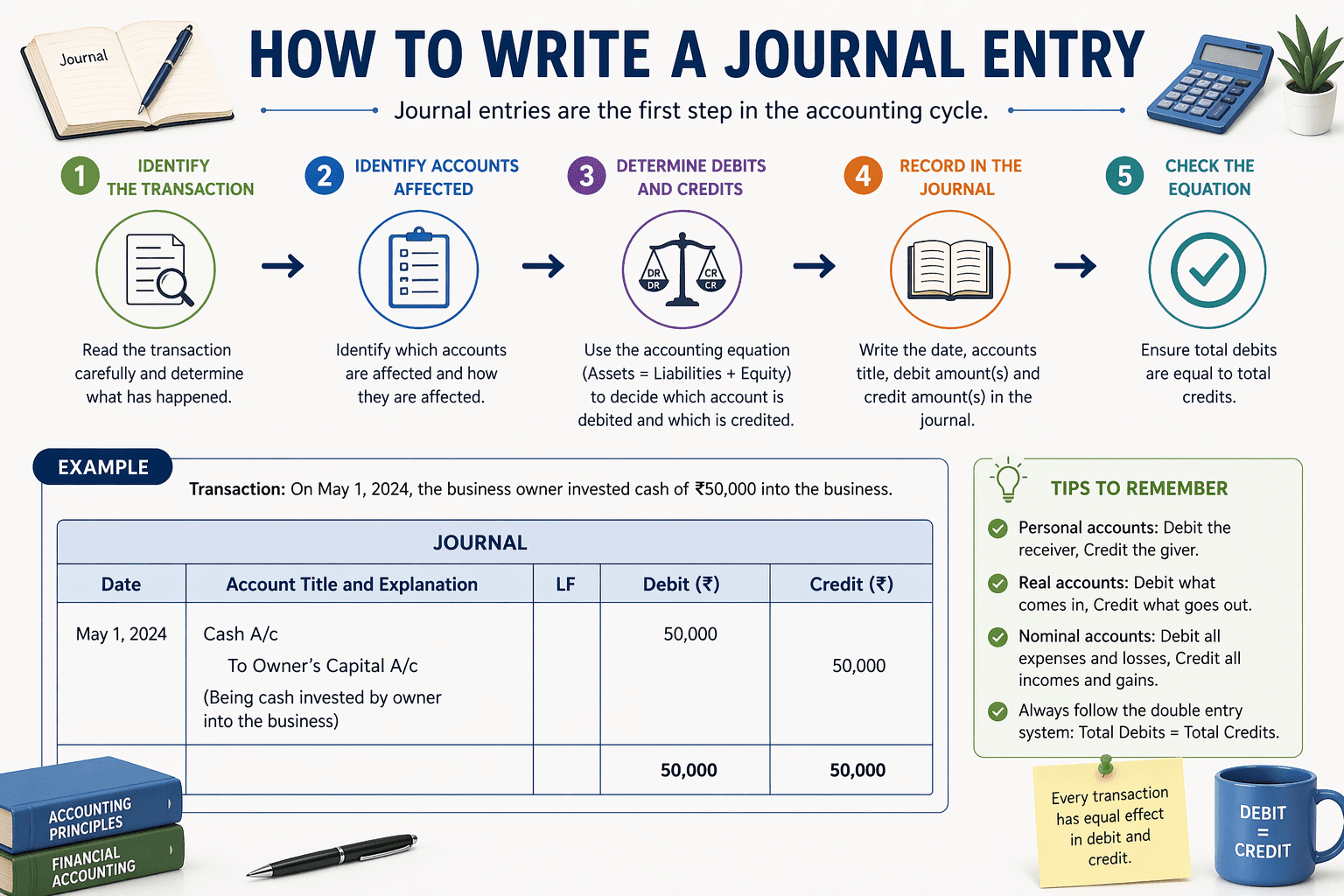
Personal Account
Debit the receiver, Credit the giver -
Real Account
Debit what comes in, Credit what goes out -
Nominal Account
Debit expenses and losses, Credit income and gains
Golden Rules with Journal Entry Examples
1. Paid rent in cash
- Rent A/c → Debit
- Cash A/c → Credit
2. Purchased furniture for cash
- Furniture A/c → Debit
- Cash A/c → Credit
3. Received cash from customer
- Cash A/c → Debit
- Customer A/c → Credit
Easy Trick to Remember
- Personal → Person
- Real → Things
- Nominal → Expenses & Income
Common Mistakes
- Confusing account types
- Wrong debit/credit entries
- Ignoring transaction nature
Practical Use Cases
- Recording daily transactions
- Preparing financial statements
- Managing business accounts
FAQs
1. Why are golden rules important?
They ensure accurate accounting records.
2. Are these rules still used today?
Yes, even modern accounting systems follow them.
3. Do software tools apply these rules?
Yes, accounting tools automate these rules in the backend.
Conclusion
Understanding the golden rules of accounting makes it easier to record transactions and avoid errors. Whether you’re handling accounts manually or using software, these rules are always at work.
For bulk transaction processing and automated categorization, tools like BillsDeck help apply these rules without manual effort, saving time and reducing errors.